

The WQF-530A Fourier Transform Infrared (FTIR) Spectrometer combines ATR-FTIR analysis with high-sensitivity QC spectral comparison to support paint quality control, helping laboratories detect formulation differences and investigate the causes of product quality deviations.
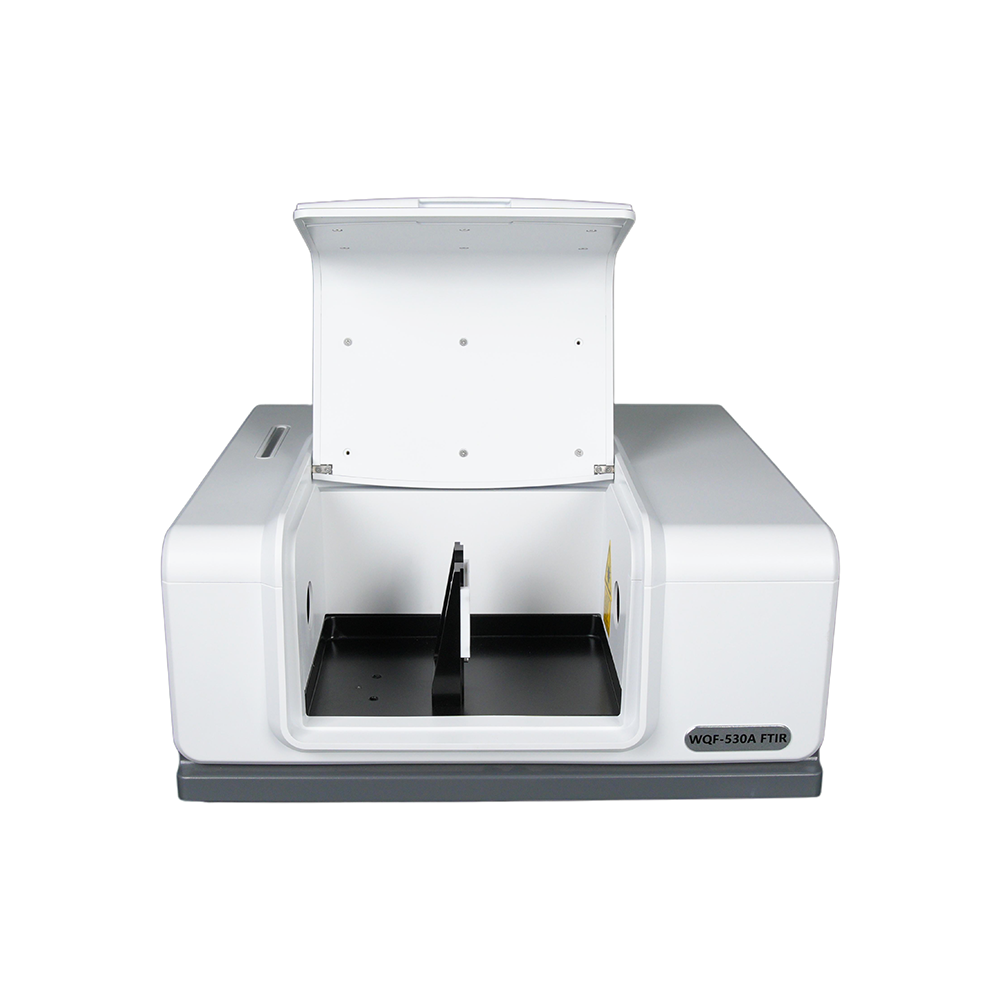
In a recent application at a paint manufacturer, the WQF-530A helped investigate an off-specification batch of green paint. Spectral comparison provided evidence pointing to a missing triazine-based crosslinking additive, which the manufacturer subsequently confirmed through a production review.
The application demonstrates how the instrument, paired with a diamond attenuated total reflectance (ATR) accessory and QC comparison software, supports laboratory investigations from initial sample measurement to the identification of actionable analytical clues.
ATR Sampling and QC Software Support Practical Quality Investigations
For paint and coatings laboratories, identifying differences between an acceptable product and an off-specification batch is an important step in troubleshooting. Overlapping absorption bands from multiple formulation ingredients can make these differences difficult to interpret.
The WQF-530A supports this work by combining infrared spectral acquisition with software tools for comparing samples. In the reported application, the diamond ATR accessory enabled direct sample measurement with minimal preparation, while the QC comparison function highlighted regions where the two spectra differed.
The workflow brings together three capabilities:
- · Convenient ATR measurement: The diamond ATR accessory simplifies sample handling for comparative infrared analysis.
- · High-sensitivity QC spectral comparison: The software highlights differences between reference and test samples, directing attention to relevant spectral regions.
- · Support for chemical interpretation: Peak positions and absorption patterns provide evidence that analysts can evaluate alongside formulation information and reference spectra.
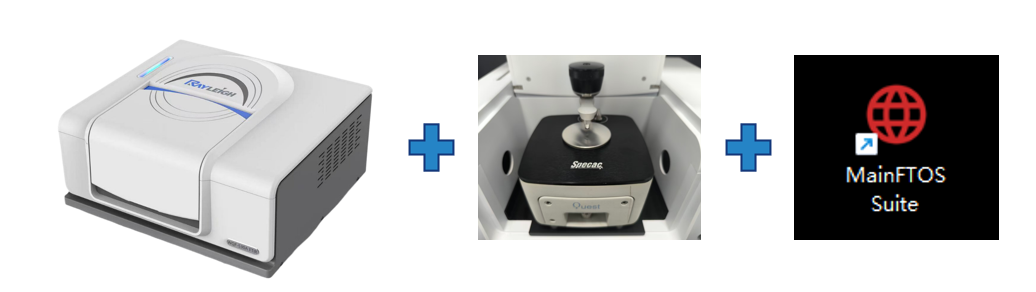
Figure 2. WQF-530A FTIR Spectrometer with a diamond ATR accessory.
Customer Application Investigating an Off-Specification Paint Batch
A paint manufacturer encountered a performance deviation in a batch of green paint and suspected that an ingredient had been omitted during formulation. The laboratory used the WQF-530A to compare an acceptable sample with the off-specification sample and identify differences that could guide the investigation.
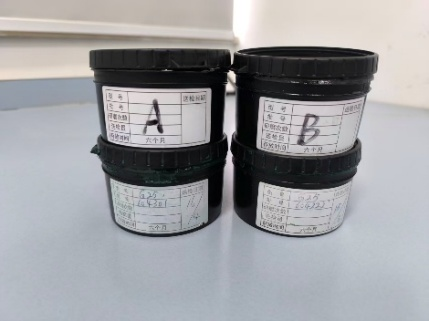
Figure 1. Paint samples used in the quality investigation.
Spectra were collected using the diamond ATR accessory at a resolution of 4 cm⁻¹ with 32 scans. Following normalization and baseline correction, the software’s high-sensitivity QC comparison algorithm was applied to the two spectra.
The results showed weaker absorption in the off-specification sample between 1540 and 1640 cm⁻¹. Characteristic bands observed in the acceptable sample were also missing in the 1000–1100 cm⁻¹ and 440–540 cm⁻¹ regions.
These differences gave the analysts specific regions to examine, narrowing the investigation from the complete formulation to a smaller set of possible missing ingredients.
In the following spectra, the red trace represents the acceptable sample and the blue trace represents the off-specification sample.
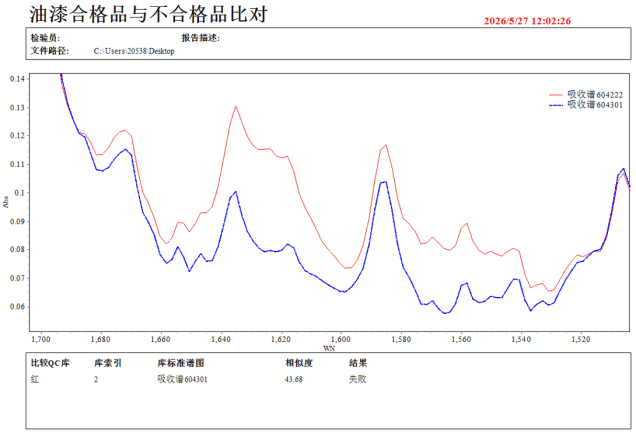
Figure 3. FTIR spectral comparison of the paint samples in the 1540–1640 cm⁻¹ region.
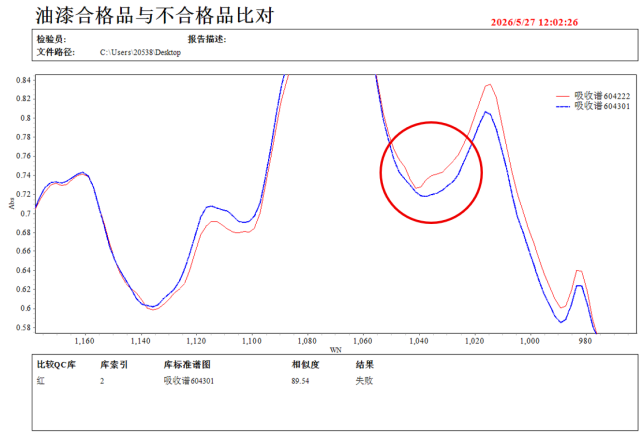
Figure 4. FTIR spectral comparison of the paint samples in the 1000–1100 cm⁻¹ region.
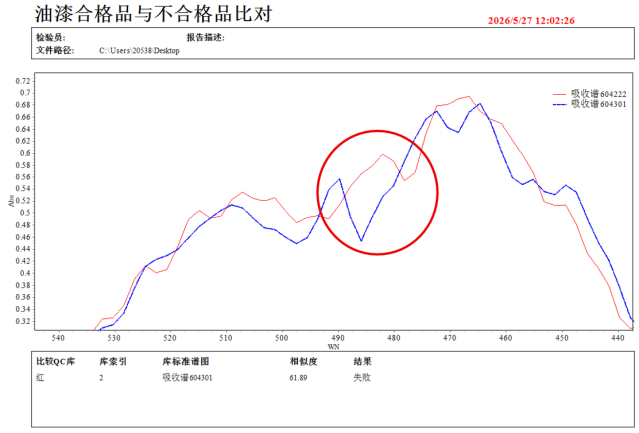
Figure 5. FTIR spectral comparison of the paint samples in the 440–540 cm⁻¹ region.
Spectral Evidence Helps to find out the Missing Ingredient
Using peak-picking analysis, the team examined seven characteristic bands in the regions showing differences: 1635, 1618, 1585, 1558, 1542, 1035, and 482 cm⁻¹. The possible assignments considered during the investigation are summarized below.
Table 1. Candidate Functional-Group Assignments Considered in the Paint Investigation
|
Candidate assignment |
Observed bands (cm⁻¹) |
Role in the investigation |
|
Primary amino group (–NH₂) |
1635 |
Considered as a possible amino-group contribution. |
|
Aromatic or heteroaromatic ring vibrations |
1618, 1585, 1542, 482 |
Evaluated as part of the overall ring-related absorption pattern. |
|
C=N-related vibrations in nitrogen-containing heterocycles |
1618, 1558 |
Considered when assessing nitrogen-containing heterocyclic additives. |
|
Nitro group (–NO₂) |
1558, 1542 |
Considered as an alternative assignment and assessed against supporting spectral features. |
|
Sulfonic acid or sulfonate-related vibrations |
1035 |
Considered as an alternative explanation for the band at 1035 cm⁻¹. |
|
C–O-containing structures in the resin, including ether linkages |
1035 |
Evaluated as another possible contribution to the observed band. |
These assignments summarize the interpretations considered in this case; individual bands do not establish compound identity.
The analysts assessed these possibilities against the full spectra and the paint formulation. The absence of expected supporting bands reduced support for the nitro and sulfonic acid or sulfonate interpretations. The combined spectral pattern instead directed attention toward an ingredient containing a nitrogen-containing heterocycle and ether-related functionality, with a possible amino-group contribution.
Comparison with reference spectra and formulation information pointed to a triazine-based crosslinking additive. An etherified melamine-formaldehyde resin was considered a likely candidate.
Production Review Confirms the Analytical Lead
Using the FTIR findings to focus its investigation, the manufacturer reviewed the production process and confirmed that a triazine-based crosslinking additive had been omitted from the off-specification batch.
The WQF-530A supplied the spectral evidence needed to locate differences and narrow the search. Formulation knowledge and reference spectra supported interpretation, while the manufacturer’s follow-up review established the production error.
For the laboratory, the value of the system lay in connecting sample comparison with a focused troubleshooting decision. The QC software made the differences visible, and subsequent spectral interpretation helped turn those differences into a practical direction for investigation.
WQF-530A Supports Quality Control in Paint and Coatings Laboratories
This application illustrates how the WQF-530A FTIR Spectrometer can support investigations of product and formulation differences. Diamond ATR sampling facilitates sample measurement, while QC spectral comparison helps laboratories identify changes that warrant further examination.
For paint and coatings manufacturers, these capabilities provide a practical basis for comparing production samples with an acceptable reference and investigating unexpected quality deviations. Analysts can combine the resulting spectra with formulation records and follow-up checks to determine the next steps.
In the green paint investigation, this workflow helped identify a missing crosslinking additive and enabled the manufacturer to confirm the cause of the off-specification batch. The case demonstrates the WQF-530A’s role as a laboratory tool for paint quality control and formulation troubleshooting.
Post time: Oct-13-2026