

When it comes to atomic emission spectrometers, most people immediately think of ICP-AES or perhaps spark direct-reading spectrometers. Few mention arc emission spectrometers. Yet, as a veteran member of the atomic emission spectrometer family, this technology has made significant contributions over the past decades to the qualitative and quantitative analysis of inorganic elements in fields such as geological exploration, non-ferrous metals, and materials science.
Even today, with high-end instruments widely available, its advantages—such as direct analysis of powder samples and high sensitivity—have kept it the designated method for determining silver, boron, and tin in the geological industry. It remains an indispensable tool in geological laboratories and is also the standard recommended method for detecting impurity elements in high-purity metals like tungsten, molybdenum, niobium, and tantalum, as well as their oxides.
The increasingly larger classic spectrograph
First, let’s get acquainted with the “veterans” of arc emission spectrometry. Early arc atomic spectrometers used photographic plates to capture emission spectra and were called spectrographs. The story began in 1969 when the predecessor of Beijing Beifen Ruili Analytical Instruments (Group) Co., Ltd.—Beijing No. 2 Optical Instrument Factory—successfully developed a one-meter plane grating spectrograph. This model remains a common sight in many laboratories today.
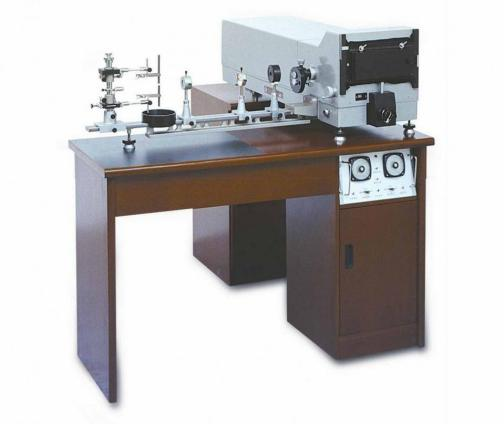
One meter spectrograph
This instrument was like a meticulous “darkroom master.” Though cumbersome to operate (requiring photographic processing steps), its exceptional sensitivity laid the foundation for arc spectral analysis and was irreplaceable at the time. You might have also seen larger models—two-meter grating spectrographs with a large green “barrel.”
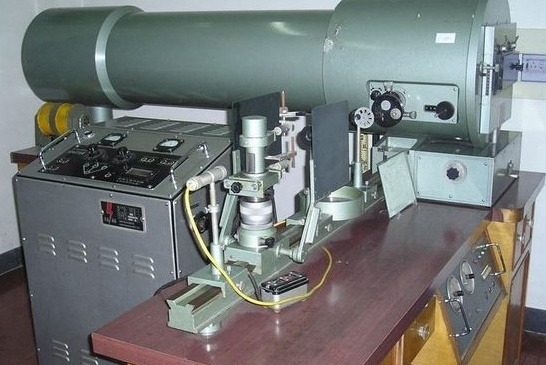
two-meter grating spectrographs
How impressive is that two-meter focal length “big barrel”? Now, look at this behemoth below. It is said to have a focal length of 3.4 meters, which is simply not suitable for a typical laboratory, and it is also equipped with a large excitation light source.
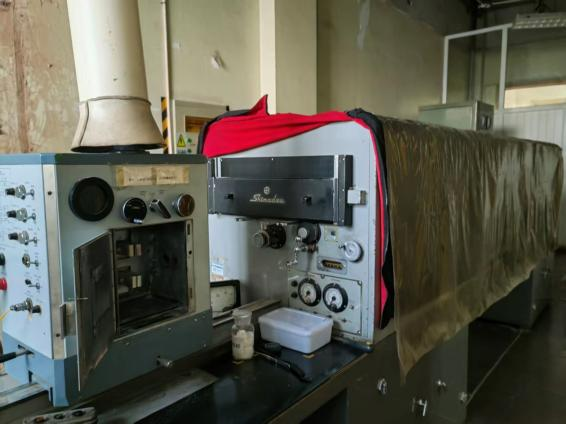
3.4-meter grating spectrograph
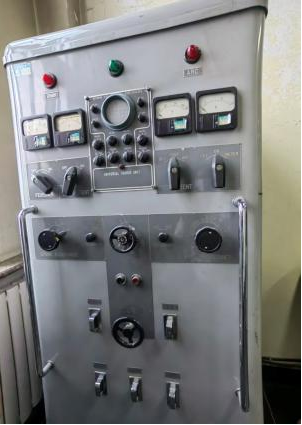
3.4-meter grating spectrograph excitation light source
The Complex Data Acquisition Process
Obtaining data from a spectrograph was a tedious and complicated affair: after preparing the sample, spectrograph was performed. Once done, the photographic plate holder had to be removed and taken to a darkroom. Under dim red safelight, the plate underwent development, fixation, and washing—a process identical to developing black-and-white photographs.
The carefully processed plate might turn out completely black due to overexposure, rendering all previous work useless. Alternatively, due to issues with the developer or fixer, the plate might be too dark or too light to be usable, forcing a restart.
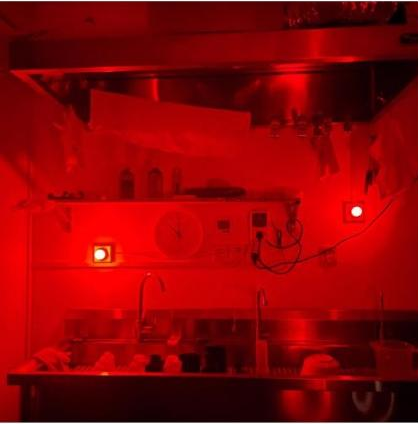
Darkroom
Due to the abundance of emission spectral lines, you needed to examine them under high magnification, picking out the analytical lines for each target element one by one. Quantitative analysis required measuring their density using a densitometer. Even for experienced analysts, this was no easy task; for novices, it was a nightmare. Eyes strained from peering at the lines, yet only a few analytical lines were identified.
Image Sensors Replace Photographic Plates
With technological advancements, image sensor technology matured and found applications across industries. Just as digital cameras replaced film cameras, image sensors revolutionized arc emission spectrometry by replacing traditional photographic plates. Using the photoelectric effect, these sensors convert optical signals into electrical signals, ultimately digitizing them for direct display on computer software—eliminating the cumbersome data acquisition process of traditional spectrographs.
The real turning point came between 2011 and 2014. BFRL launched the AES-7000 series—a disruptive innovation that combined arc source spectral analysis with photomultiplier tubes (PMTs) to achieve “direct reading.” Users were finally freed from labor-intensive steps like plate processing and density measurement, dramatically improving efficiency and accelerating the adoption of this technology in geology and metallurgy.
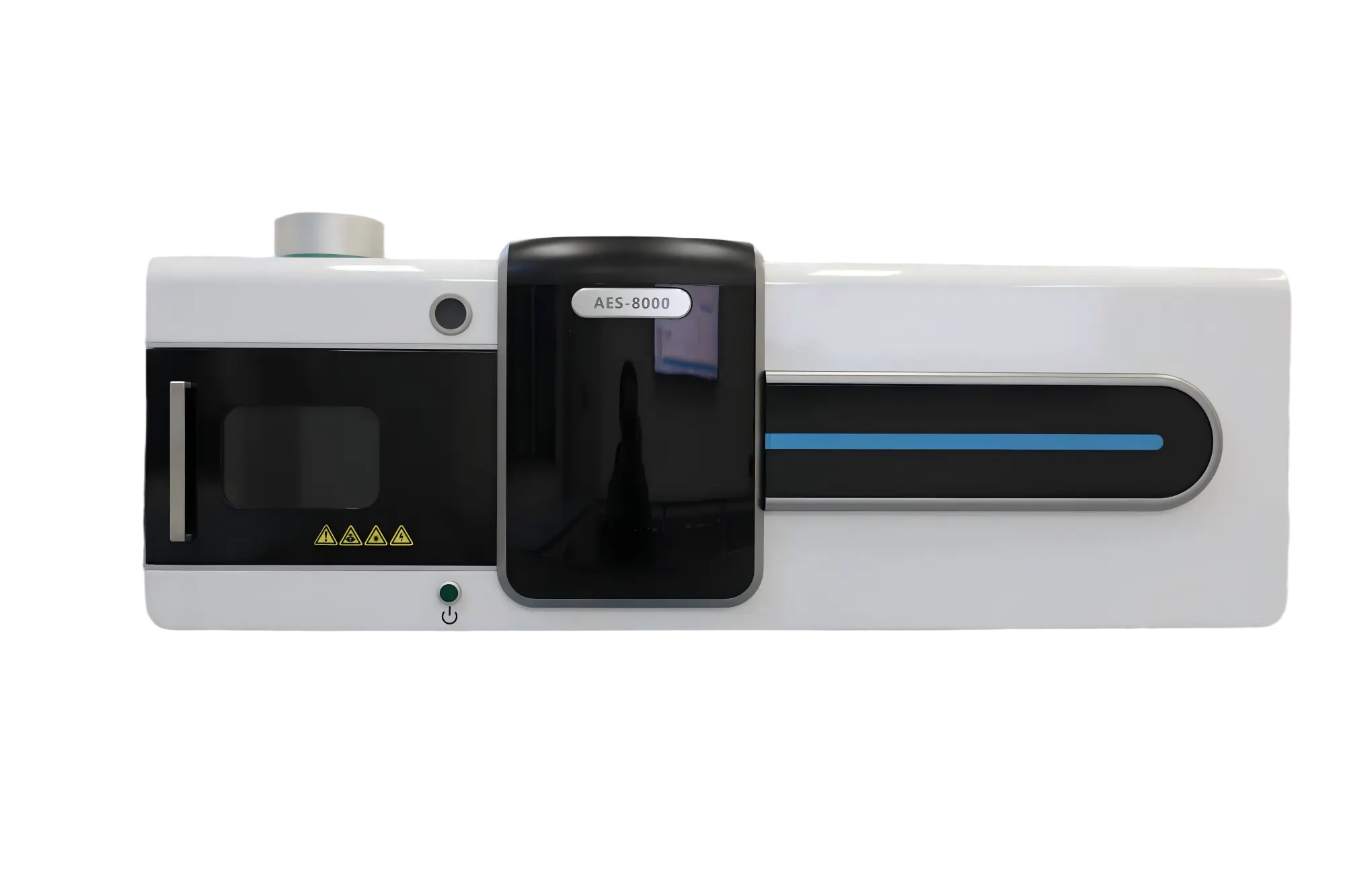
While the AES-7000 series was fast, it had limitations—its spectral lines were fixed. In 2017, BFRL took another leap forward with the official launch of the next-generation arc emission spectrometer, the AES-8000. This instrument inherited the strengths of traditional one-meter grating spectrographs—alternating current/direct current (AC/DC) arc excitation, a three-lens illumination system, and the classic Ebert-Fassie optical path—while adopting a high-performance CMOS sensor for signal detection. Completely redesigned, it achieved a leap from “knowing it exists” to “seeing it all.” Simple to operate, fast, and convenient, the AES-8000 directly addressed the pain points of spectrograph users and quickly became the mainstream product in the new generation of arc emission spectrometers.
✔ Performance Breakthrough: Adoption of the “Ebert-Fassie optical system + CMOS detector” combination. The sensitivity of CMOS is several times that of ordinary CCDs, and coupled with patented optics, background interference is minimized.
✔ Core Innovation: True full-spectrum analysis. It not only solved the industry challenge of accurately measuring elements like silver, tin, and boron in geological samples but also met the precision requirements of national standards.
✔ Smart Experience: Automatic electrode alignment, safety interlocks, automatic software background correction—these intelligent features make the instrument not only precise but also more “user-friendly” and safer.
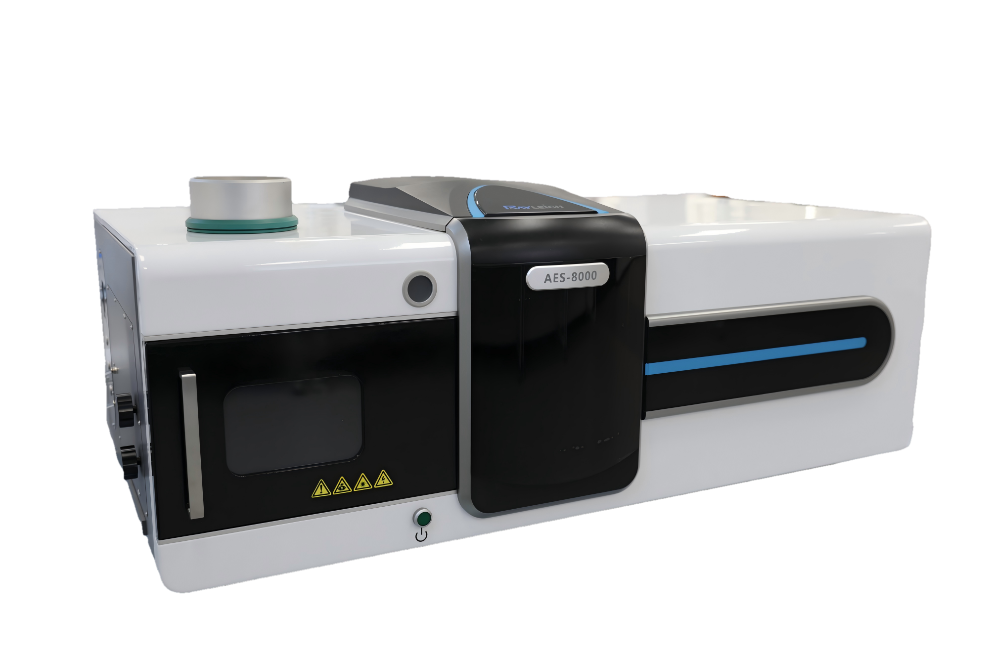
AES-8000 AC/DC Arc Emission Spectrometer
Comparison Between Old and AES-8000
|
Traditional Spectrograph |
AES-8000 |
| Cumbersome operation (requires spectrography, plate processing, spectrum reading, density measurement, etc.) | Simple operation; direct sample test results |
| Reagent consumption (developer and fixer require preparation with large quantities of chemicals) | No chemical reagents required |
| Photographic plates are consumables—expensive and inconsistent in quality | Detection system has no consumables; imaging quality is stable |
| Ordinary electrode clamps—poor heat resistance and prone to damage | Water-cooled electrode clamps—long service life |
| Manual electrode gap adjustment—high susceptibility to human error | Automatic electrode alignment—high precision, good repeatability, eliminates human error |
| High analyst skill requirement—needs expertise in spectrum identification, reading, and photometry | Software workstation controlled—low personnel requirement, easy to learn |
| Loud sample excitation noise | New-generation excitation source—quieter operation |
| Simplistic structure—poor safety | Multiple safety measures: operation chambersafety interlocks, circulating water automatic monitoring, professional shielding glass against electromagnetic radiation, etc. |
From classic to innovative, and then becoming a classic once more. In the development of arc emission spectrometers, the efforts of Beijing Beifen-Ruili Analytical Instruments (Group) Co., Ltd. reflect a clear path of “technological relay,” as demonstrated by its product iterations. Through continuous self-improvement, the company has revitalized an “ancient” analytical technique in the era of intelligent technology.
Post time: May-28-2026