

Many people working in gas chromatography analysis have perfected their method, column, and temperature parameters, yet their data is still inaccurate, peaks fail to appear, or sensitivity is insufficient. A very common reason is choosing the wrong detector. The column determines "whether components can be separated," while the detector determines "whether they can be measured accurately." Different samples, different components, and different concentration ranges correspond to completely different detectors. Choosing the wrong detector may result in no response, extremely low sensitivity, poor linearity, and other issues, compromising the scientific validity and accuracy of the data.
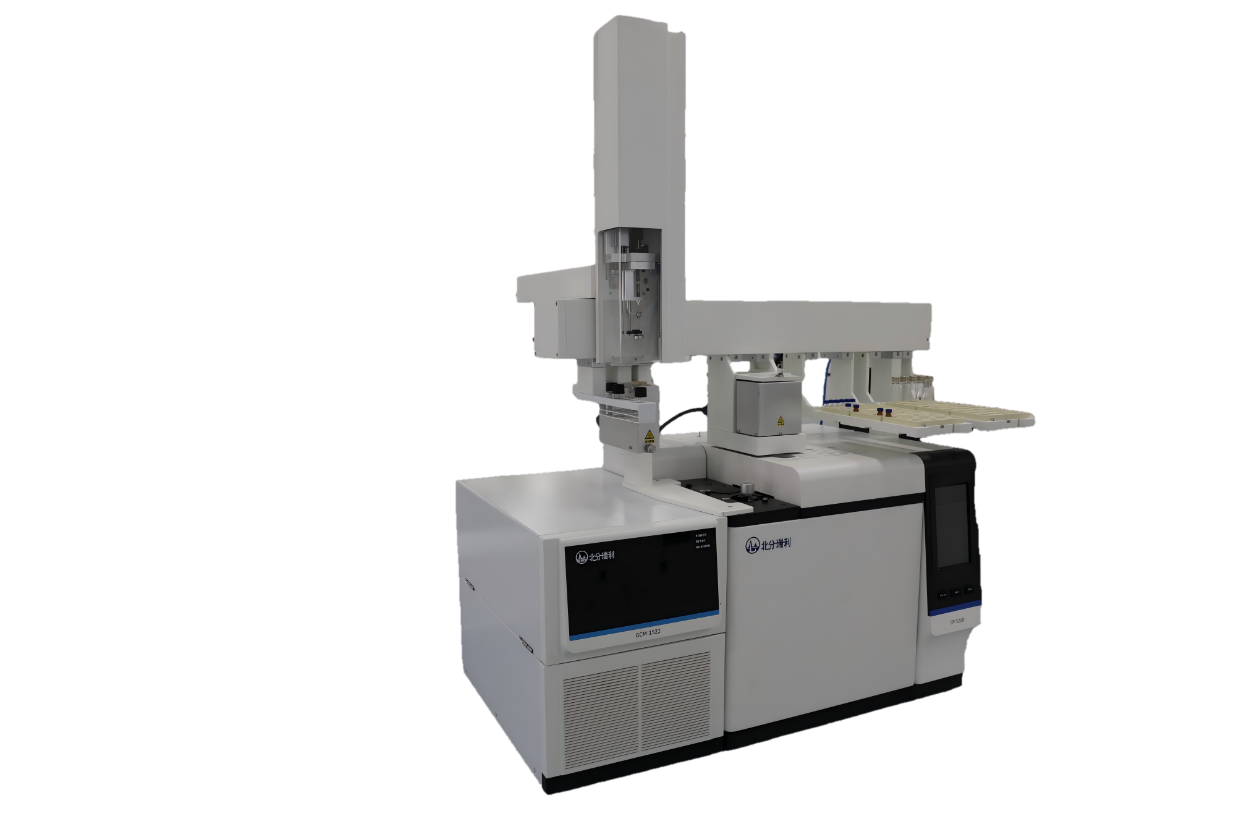
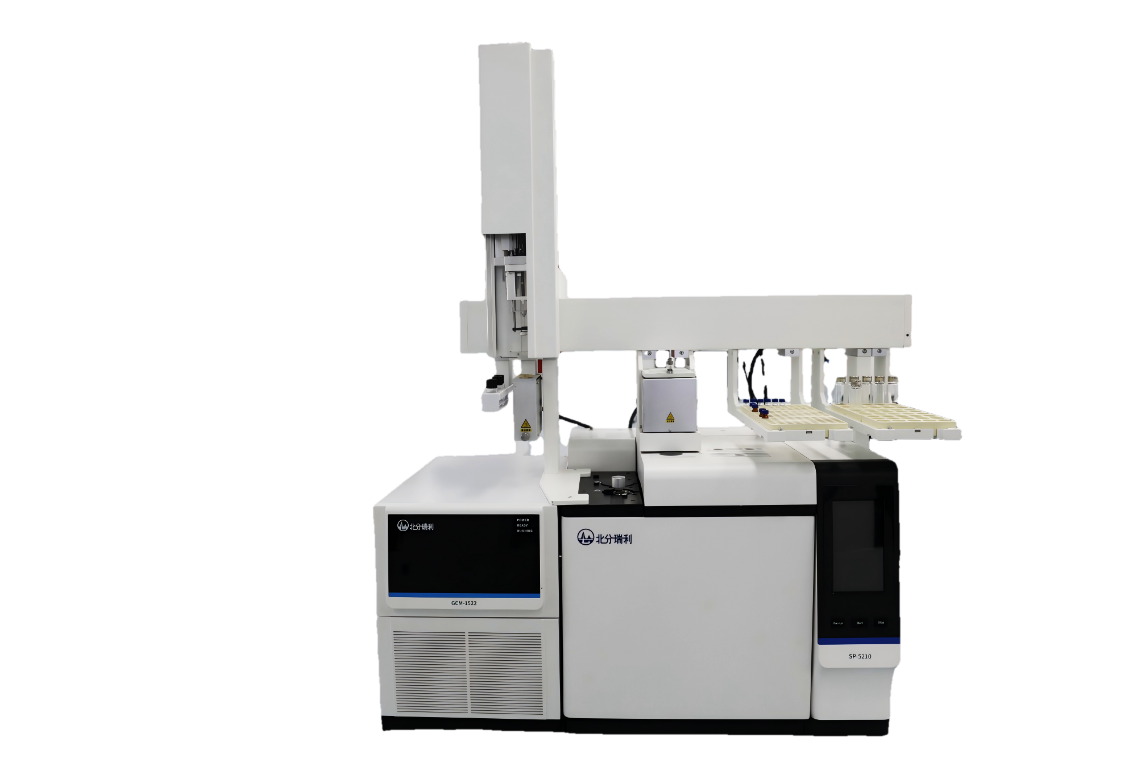
BFRL SP-5000 seriesGAS CHROMATOGRAPH
Today, we will explain in an accessible way the selection logic, applicable components, advantages and disadvantages, and common pitfalls of four commonly used gas chromatography detectors. This can be applied to the analysis and detection of gases, oil products, volatile organic compounds (VOCs), residual solvents, and more.
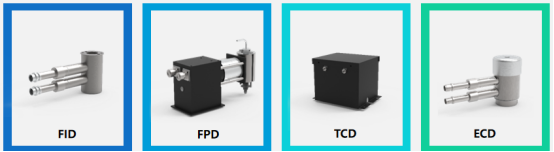
1) FID — Detection of Organic Hydrocarbons
Overview: The Flame Ionization Detector, abbreviated as FID. FID is a detector with broad applications in gas chromatography, good linearity, and excellent stability. It works based on the principle that organic compounds burn in a hydrogen flame to generate electrical signals. It typically measures only organic compounds and responds only to hydrocarbons, with high sensitivity.
Applications: It is the mainstay for refinery gas, natural gas, and hydrocarbon analysis. For all carbon-containing organic compounds, such as alkanes, alkenes, aromatics, alcohols, esters, VOCs, residual organic solvents, and oil product components, as long as you are measuring hydrocarbons or organic compounds, FID can be given priority.
Features: High sensitivity, stable baseline, and an extremely wide linear range. It can measure both trace and constant components, and its repeatability outperforms most detectors. However, its disadvantage is that it has completely no response to inorganic gases such as oxygen, nitrogen, carbon monoxide, carbon dioxide, hydrogen sulfide, water, and air.
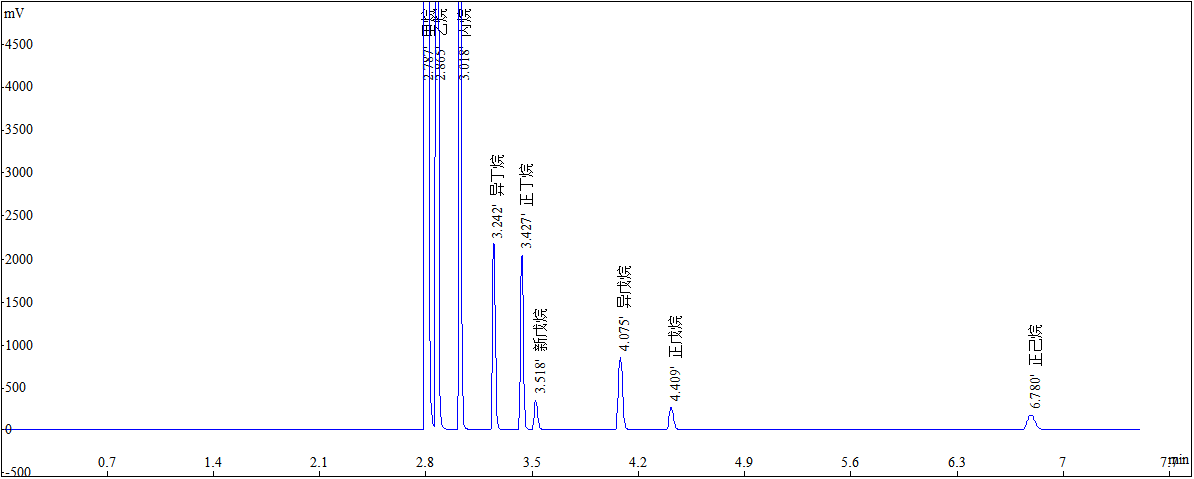
Case: Taking the configuration provided to a scientific instrument company in Hunan Province as an example, the user's detection requirement was the analysis of methane, ethane, propane, isobutane, isopentane, n-pentane, and hexane in natural gas. Using the SP-5210Pro gas chromatograph, equipped with a BH-1 column dedicated to light hydrocarbon analysis and an FID detector that responds only to hydrocarbons, full-spectrum efficient separation and detection were completed within 7 minutes. The quantitative results for each hydrocarbon component were accurate, as shown in the chromatogram below.
2) TCD — Detection of Constant/Trace Permanent Gases
Overview: The Thermal Conductivity Detector, abbreviated as TCD. TCD is a universal, non-destructive detector in gas chromatography for measuring inorganic and organic substances. It does not rely on combustion; instead, it generates peaks based on resistance differences caused by different thermal conductivities of gases. It is mainly used for the determination of constant and even trace-level permanent gases.
Applications: Oxygen, nitrogen, hydrogen, argon, carbon monoxide, carbon dioxide, methane, air components, etc. For measuring permanent gases and inorganic gases, TCD is usually a must. In application scenarios such as refinery gas and full-component natural gas analysis, a dual-detector configuration of TCD + FID is often used.
Features: TCD responds to all gases and can measure both inorganic and constant-level organic compounds. However, because its sensitivity is far lower than that of FID, it is not recommended for quantitative analysis of trace hydrocarbons. It is also extremely sensitive to flow rate, temperature, and pressure. If parameters are unstable or not properly tuned, baseline drift may occur. In addition, because of its "non-destructive detection" nature, TCD is often used as a串联 detector.
Case: Taking the configuration provided to an institute of the Chinese Academy of Sciences as an example, the user's detection requirement was the analysis of permanent gases including hydrogen, oxygen, nitrogen, methane, and carbon monoxide. Using the SP-5220 gas chromatograph, equipped with a 5A molecular sieve column + HayeSepA column and a TCD detector dedicated to permanent gas analysis, excellent qualitative and quantitative results for each component were achieved within 9 minutes. At the same time, an automatic ten-port valve injection was used to reflect components, and a six-port valve switching method was used to shield interfering components and protect the column. The chromatogram is shown below.
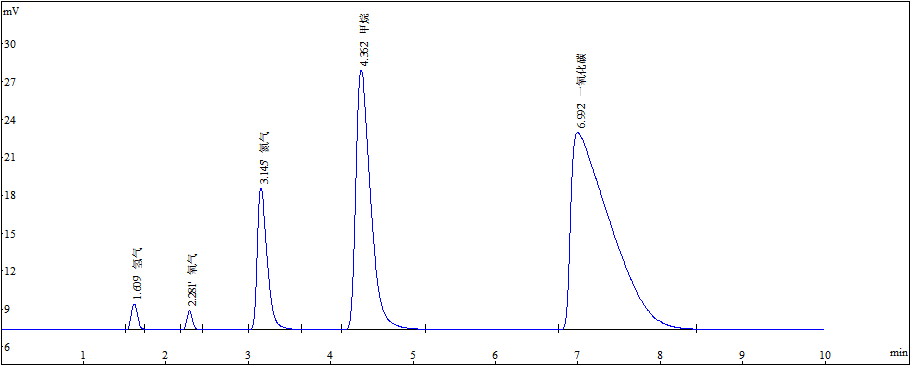
Today we only covered two detectors: the FID flame ionization detector and the TCD thermal conductivity detector. They are also the two most common and most widely used detectors in gas chromatography analysis. FID can be said to specialize in high-sensitivity organic trace/ultra-trace analysis (ppb–ppm level), while TCD focuses on full-component universality and constant-level detection of permanent gases (ppm–% level). Together, they complement each other and can cover most application scenarios in chemical, energy, environmental, food and pharmaceutical, scientific research, and other industries.
Next time, we will discuss two other detectors: the FPD flame photometric detector and the ECD electron capture detector. What are the differences in their usage characteristics and application scenarios?
Post time: Sep-11-2026