

The HMS Series Emerging Contaminants LC–MS/MS Method Package enables high-throughput screening and targeted quantification of at least 500 emerging contaminants in a single injection using the HMS Series Triple Quadrupole LC–MS/MS System.
A Ready-to-Use Method Package for Emerging Contaminants Analysis
Emerging contaminants encompass compounds with widely varying physicochemical properties, including per- and polyfluoroalkyl substances (PFAS), antibiotics, endocrine-disrupting chemicals, flame retardants, plasticizers, and pesticide residues. Complex sample matrices and trace-to-ultra-trace concentrations make their simultaneous analysis particularly demanding.
Conventional workflows often use separate methods for individual compound classes, requiring multiple injections and frequent changes to chromatographic and mass spectrometric conditions. The HMS method package addresses these challenges through multi-class analysis in a single injection.
Users receive a complete set of LC-MS/MS method parameters that can be imported into the HMS workstation. This substantially reduces the need for independent MRM-transition optimization, retention-time determination, and chromatographic method development, providing a practical starting point for laboratory implementation and verification.
HMS Instrument Technology for High-Throughput Screening
The HMS Series Triple Quadrupole LC–MS/MS System combines a high-performance heated electrospray ionization (ESI) source, tandem quadrupole mass analysis, and ultra-high-performance liquid chromatography (UHPLC). The UHPLC system supports rapid gradient elution and the chromatographic conditions specified in the method package.
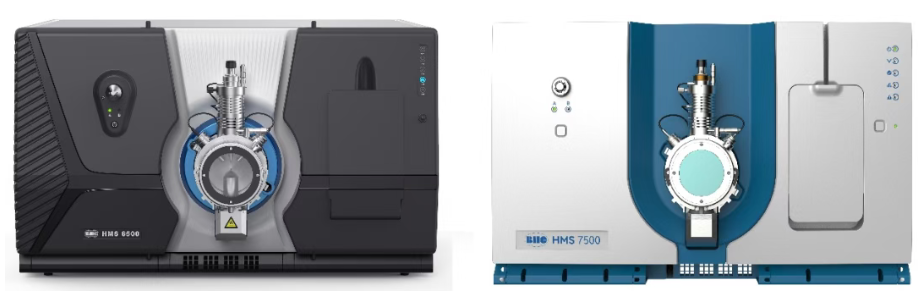
Figure 1. HMS Series Triple Quadrupole LC–MS/MS Systems.
Rapid polarity switching accommodates the negative-ion analysis of PFAS and the positive-ion analysis of many antibiotics within the same run. Optimized source temperature and desolvation-gas settings help reduce unnecessary in-source fragmentation, while the ion-inlet and curtain-gas design helps limit matrix contamination of the mass analyzer.
High-precision Q1 and Q3 mass filters provide selective precursor- and product-ion filtering for multiple reaction monitoring (MRM). Combined with optimized transitions and chromatographic separation, this supports selective detection of target compounds in complex samples.
The workstation’s intelligent MRM scheduling algorithm dynamically allocates dwell times according to retention-time windows. This helps maintain sufficient data points across chromatographic peaks when hundreds of compounds are monitored, supporting consistent peak integration and quantitative precision.
AI-assisted screening functions help flag potentially interfering peaks and suspected positive findings for analyst review, improving the efficiency of large-batch data processing.
Broad Coverage for Priority Pollutants and Related Contaminants
The method package covers substances in China’s List of New Pollutants for Priority Control (2023 Edition) that are amenable to LC–MS/MS analysis. It also extends to additional contaminant classes relevant to environmental monitoring and food-safety testing.
These include PFAS, multiple classes of veterinary and human-use antibiotics, phenolic compounds, selected brominated and emerging flame retardants, plasticizers, and selected organophosphate and pyrethroid pesticides.
For PFAS analysis, the package includes PFOS-, PFOA-, and PFHxS-related analytes within its specified compound list. The accompanying method files define the individual compounds covered and their analytical conditions.
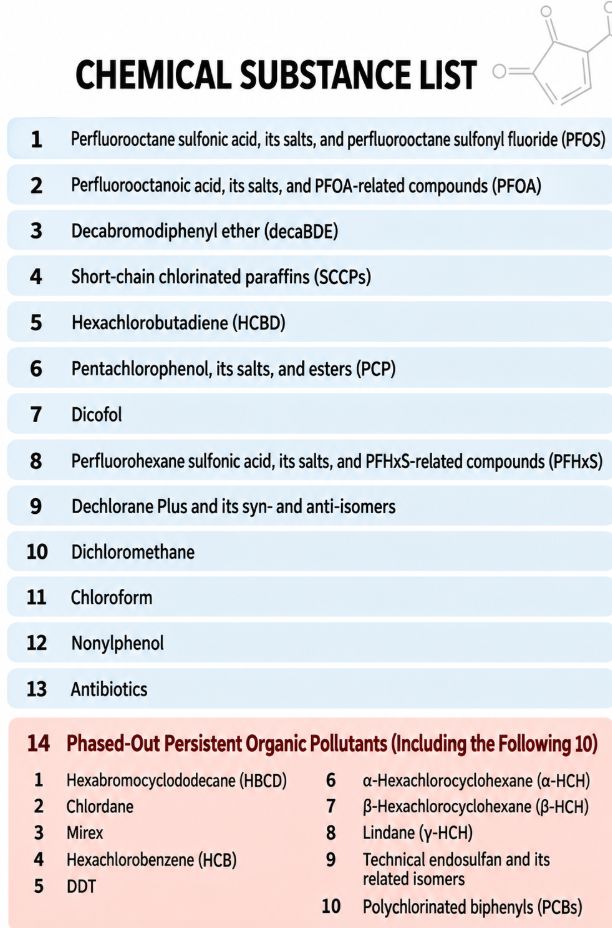
Figure 2. Priority-controlled pollutant groups addressed by the analytical documentation. LC–MS/MS coverage is defined by the analyte list supplied with the method package.
Compounds better suited to gas chromatography are identified separately in the documentation and addressed in the GC–MS/MS method package. The HMS product family also includes triple quadrupole GC–MS/MS systems for these complementary applications.
Figure 3. HMS Series Triple Quadrupole GC–MS/MS System
Complete Analytical Parameters Supplied with the Package
The HMS method package provides the parameters needed to establish a consistent instrumental workflow:
- MRM transitions: Quantifier and qualifier transitions for at least 500 compounds, including optimized collision energy (CE) and declustering potential (DP) settings.
- Retention times: Reference retention times and acquisition windows established under the specified chromatographic conditions.
- Instrument settings: Ion-source parameters and positive/negative polarity-switching settings.
- Column specifications: Recommended column models, particle sizes, lengths, and internal diameters.
- LC gradients: Complete gradient-elution programs covering the target compounds.
- Mobile-phase and operating conditions: Solvent compositions, additives, flow rates, column temperatures, and injection volumes.
| Parameter Category | Deliverables | Description |
|---|---|---|
| MRM Transition List | Quantifier and qualifier MRM transitions for ≥500 compounds | Optimized parameters, including collision energy (CE) and declustering potential (DP) |
| Retention Time | Reference retention time and retention-time window for each compound | Calibrated using the chromatographic column and gradient conditions specified in the method package |
| Ion Source Parameters | Spray voltage, ion source temperature, nebulizing/drying gas flow rates, collision-gas pressure, etc. | Preset parameters for positive/negative ion-mode switching |
| Chromatographic Column Information | Recommended column model and specifications (particle size, length, and internal diameter) | Consistent with the conditions used for retention-time calibration |
| LC Gradient | Complete gradient-elution program (time–mobile-phase composition table) | Covers the separation windows of all compounds |
| Mobile-Phase Conditions | Mobile phases A/B, additive concentrations, column temperature, flow rate, and injection volume | Mobile-phase scheme compatible with both positive and negative ion modes |
Figure 4. Analytical parameters supplied with the HMS Emerging Contaminants LC–MS/MS Method Package.
The definitive settings are provided in the accompanying method files for import into the HMS workstation. Reference validation data—including linear range, detection limits, quantification limits, precision, and recovery—are also supplied to support method implementation and laboratory verification.
Supporting Reliable Quantification in Complex Matrices
Humic substances, proteins, lipids, and salts can suppress or enhance ionization, affecting quantitative results. The method package includes recommendations for isotopically labelled internal standards covering PFAS, antibiotics, phenolic compounds, pesticides, and other analyte classes.
The HMS workstation supports internal-standard calibration and matrix-matched calibration curves to help compensate for these effects in wastewater, soil extracts, biological samples, and other complex matrices.
Reference sample-preparation workflows are provided for different sample types, including:
- Solid-phase extraction (SPE) for water samples.
- Accelerated solvent extraction (ASE) or QuEChERS extraction for soil.
- Ultrasonic extraction for atmospheric particulate matter.
- Protein precipitation and liquid–liquid extraction for biological samples.
These resources connect sample preparation with instrumental analysis, supporting workflows for groundwater, surface water, wastewater, soil, atmospheric particulate matter, and biological samples.
Targeted Quantification and Preliminary Screening
For targeted quantitative analysis, selective MRM acquisition and internal- or external-standard calibration support the determination of known contaminants. The supplied method parameters and validation reference data help laboratories implement workflows for environmental monitoring, food-safety testing, and risk assessment.
For preliminary screening, at least 500 compounds can be examined in a single injection. Laboratories can identify potential positive findings across large sample batches and prioritize subsequent confirmation, quantitative analysis, and further investigation.
By combining the HMS Series Triple Quadrupole LC–MS/MS System with preconfigured methods, intelligent MRM scheduling, matrix-correction strategies, and sample-preparation guidance, the package provides an integrated workflow for emerging contaminants analysis. It helps laboratories reduce repeated method setup and improve testing efficiency while supporting both broad screening and targeted quantitative work.
Post time: Sep-28-2026