

When performing emission spectroscopy analysis, you often encounter the following issues: weak spectral lines become too faint with low concentration detection, resulting in excessive noise interference and unusable data; while strong spectral lines easily saturate and suffer self-absorption during high concentration testing, leading to drastically skewed quantitative results. Manual switching between spectral lines is not only time-consuming but also prone to errors. Now, automatic switching between strong and weak spectral lines is available:
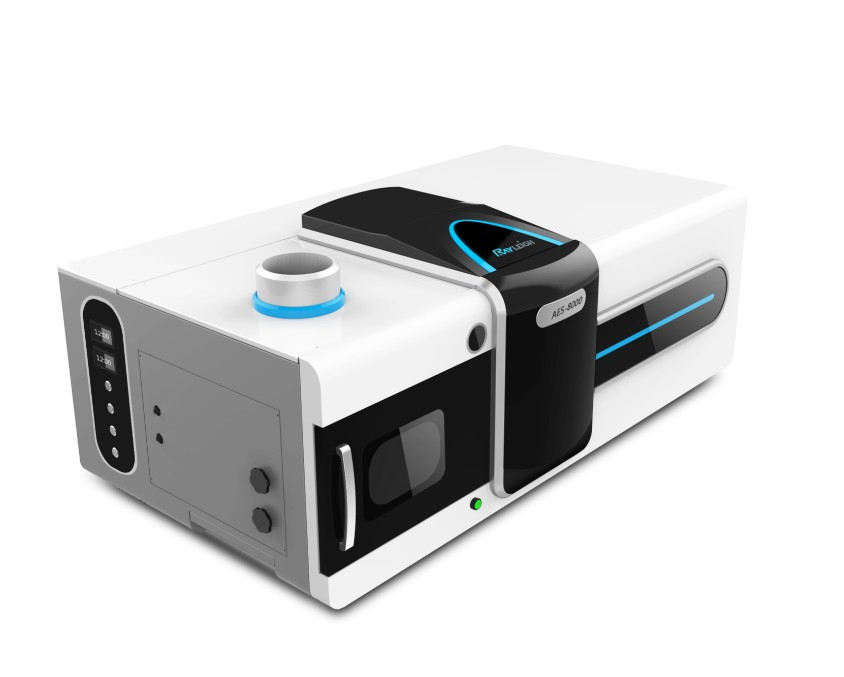
The AES-8000 full spectrum AC/DC arc emission spectrometer from BFRL has an "intelligent combination" for multi spectral line joint analysis, which solves the pain points of full range measurement with one click, making emission spectrum analysis more efficient and accurate.
What is automatic conversion of strong and weak spectral lines?
Simply, it is an "intelligent regulator" for emission spectroscopy detection. During the detection process, there is no need for manual intervention, and it can automatically retrieve spectral lines with appropriate intensity in real-time based on the concentration and content of each element, achieving accurate measurement without faults across the entire range. Whether it's low or high concentration, there's no need to manually switch spectral lines anymore. The software can automatically adapt to the optimal solution!
Core advantage: Why can it become the "efficiency king"?
Wide range full coverage: low concentration relies on strong spectral lines to maintain sensitivity, high concentration relies on weak spectral lines to maintain linearity, without the need to change parameters for multiple measurements or manually change lines, easily covering the entire concentration range.
Anti distortion: Real time monitoring of strong spectral lines, once the threshold is reached, it automatically switches to weak spectral lines, completely solving the problem of high concentration measurement deviation.
Accuracy is not compromised: Strong and weak spectral lines complement each other, maintaining high accuracy in joint analysis of multiple spectral lines.
How does it achieve "intelligent switching"?
Two step implementations of automatic adaptation, the principle is simple and easy to understand:
(1) Coexistence of multiple working curves: The software simultaneously collects multiple analysis spectral line signals of the same element with different strengths and weaknesses, and fits the working curve of each spectral line. Simply set the conversion threshold based on the linear range of each working curve to complete the grouping of strong/weak spectral lines.
(2) Dynamic switching: First, use strong spectral lines to dominate the measurement. Once the detection result reaches the threshold, it will automatically switch to weak spectral lines and seamlessly transition throughout the entire process.
Application Scenarios
In the determination of silver (Ag), boron (B), tin (Sn), molybdenum (Mo), and lead (Pb) in soil and stream sediment samples for the geological industry, the advantages of automatic switching between strong and weak lines are fully realized.
For low-concentration content, strong lines—Ag (328.068 nm), Sn (317.50 nm), B (249.773 nm), Mo (313.2594 nm), and Pb (283.3069 nm)—precisely capture trace components. When concentrations exceed the line-switching threshold, the system automatically switches to weak lines to avoid saturation, and can even perform multiple switches (e.g., for Pb). Through combined analysis using both strong and weak lines, the system not only meets the requirements for low-level detection but also covers the required detection ranges for soil and stream sediment samples.


In summary, automatic switching between strong and weak spectral lines for multi-line combined analysis requires no manual intervention and no preliminary experiments. It effortlessly resolves the pain points of strong-line saturation and weak-line noise, while balancing sensitivity and linearity—upgrading spectrometric analysis from "manual adaptation" to "intelligent, effort-free operation."
Post time: Jul-30-2026