

In the field of biomass catalytic conversion research, guaiacol, as a typical lignin-derived phenolic model compound, has long been a focus of study in hydrodeoxygenation (HDO) reactions. The core of this research is to convert lignin-based phenolics into high-value-added products such as cycloalkanes, aromatics, cyclohexanol, or cycloalkyl ethers through precise cleavage of C-O bonds, thereby replacing conventional petrochemical routes for the production of fuels and fine chemicals and supporting the high-value utilization of biomass resources in the context of carbon neutrality.
This reaction system typically involves complex mixtures of multiple compound classes, including aromatics, cycloalkanes, phenols, ethers, ketones, and alcohols. Achieving efficient separation and accurate quantification of each component is a challenge faced by gas chromatography analysts. The Application Center of BFRL has successfully established a gas chromatographic method for the simultaneous determination of 10 key components in this reaction system using the SP-5000 series gas chromatograph (equipped with a BH-624 column and FID detector), and has completed the construction and linearity validation of standard curves at six concentration levels.
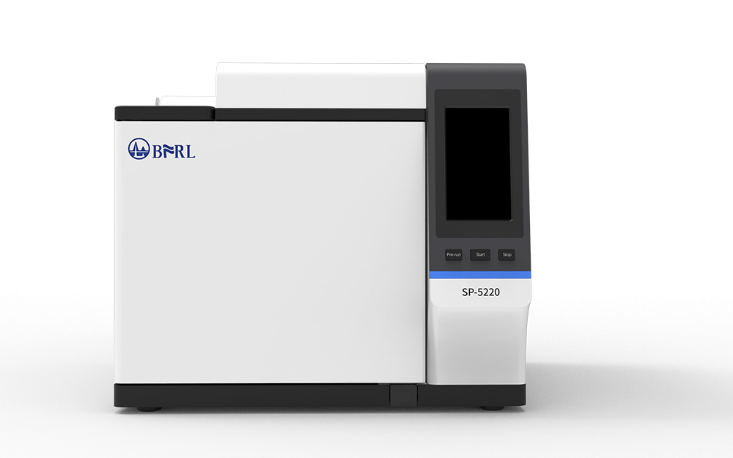
RAYLEIGH SP-5220 Gas Chromatograph
1 Components to Be Analyzed and Separation Challenges
The 10 target components addressed by this method are: cyclohexane, benzene, cyclohexene, methoxycyclohexane, cyclohexanol, anisole, cyclohexanone, 2-methoxycyclohexanone, phenol, and guaiacol. Their separation challenges are mainly reflected in three aspects.
1.1 Wide boiling point range.
From cyclohexane (81°C) to pentadecane (270°C), the optimization of the temperature program as well as its control precision and stability are key;
1.2 Significant polarity differences
Nonpolar aromatic hydrocarbons (benzene, anisole) coexist with polar oxygen-containing compounds (cyclohexanol, phenol, guaiacol), so the selection of the stationary phase must take both types of compounds into account.
1.3 Key difficult-to-separate pairs
The separation of cyclohexane and benzene is a classic challenge, as the two have close boiling points (80.7°C vs 80.1°C) and are both nonpolar compounds. In addition, the separation of components such as cyclohexene and cyclohexane, and anisole and cyclohexanone, also requires fine optimization of conditions and instrument control.
2 Column Selection and Analysis
BH-624 is a column designed specifically for the analysis of volatile organic compounds and residual solvents. Its stationary phase is “6% cyanopropylphenyl-94% dimethylpolysiloxane,” making it a medium-polarity column. In this method, a 60 m × 0.25 mm × 1.4 μm specification is used; with a narrower inner diameter and a longer column length, it can achieve a higher theoretical plate number than a conventional 30 m column, which is the basis for achieving high-resolution separation of the above complex mixture.
2.1 Balancing polar and nonpolar compounds
For complex samples containing both nonpolar hydrocarbons and polar oxygen-containing compounds, a medium-polarity column can provide a better balance of retention and separation.
2.2 Excellent inertness toward active compounds
BH-624 has good inertness toward active compounds such as phenols and alcohols, effectively improving peak shape and reducing tailing.
2.3 High column efficiency guarantee
A 0.25 mm inner diameter combined with a 60 m column length provides sufficient plate number for resolving key difficult-to-separate pairs (such as cyclohexane/benzene) while ensuring separation resolution.
3 Method Development and Detailed Chromatographic Conditions
Through systematic optimization and repeated testing and verification, we established chromatographic conditions that achieve baseline separation of the 10 target components. The optimized specific parameters are shown in the table below.
Tab. 1 Gas Chromatographic Analysis Conditions
|
Item |
Parameters |
|
Chromatographic column |
BH-624,60m×0.25mm×1.4μm |
|
Carrier gas |
Nitrogen, column pre-pressure 150kPa (constant pressure mode) |
|
inlet temperature |
250℃ |
|
Injection mode |
Shunt intake, diversion ratio 50:1 |
|
Column temperature program |
Maintain 50 ℃ for 2 minutes, raise to 230 ℃ at a rate of 5 ℃/min, and maintain for 8 minutes |
|
Detector |
FID, temperature 300°C |
|
Detector gas |
Air,300mL/min Hydrogen,30mL/min Supplemental gas (nitrogen),25mL/min |
3.1 Key Parameters: Constant Pressure Mode
During temperature programming, the constant pressure mode allows the linear velocity of the carrier gas to decrease as the temperature rises, which helps improve the resolution of high-boiling-point components in the high-temperature segment. A column head pressure of 150 kPa provides a suitable column flow rate for the 60 m long column.
3.2 Key Parameters: Temperature Programming
Starting at 50°C and holding for 2 min ensures that low-boiling-point components such as cyclohexane and benzene are fully retained and separated at low temperature;
A relatively gentle heating rate of 5°C/min facilitates good separation of components with close boiling points (such as methoxycyclohexane, cyclohexanol, anisole, and cyclohexanone) in the mid-temperature range;
Holding at 230°C for 8 min ensures that high-boiling-point components such as pentadecane are completely eluted, avoiding residual interference with subsequent analysis.
3.3 Key Parameters: Split Ratio
A relatively high split ratio (50:1) helps obtain sharp peak shapes and reduce the influence of solvent tailing, making it suitable for routine analysis of high-concentration reaction product samples.
3.4 Key Parameters: Detection Conditions
The FID uses a detector temperature of 300°C to ensure that all components (including high-boiling-point phenols) pass through the detector in the gaseous state, and a good gas ratio (air:hydrogen = 10:1) provides a stable response for the FID.
4 Calibration Curves and Separation Chromatograms of Each Component
To meet the requirements for accurate quantification, an external standard method was used to establish calibration working curves at six concentration gradients. Dichloromethane was selected as the solvent according to the actual sample conditions; it must be ensured that the solvent does not interfere with the peaks of the target components and is mutually soluble with each component. The prepared mixed standard solutions at each concentration gradient cover the expected concentration ranges of the components in typical actual samples. Linear fitting was performed with the peak area of each component as the abscissa and the concentration as the ordinate.
The experimental results show that the 10 target components all exhibit good linear relationships within the measured concentration ranges—with correlation coefficients R² all greater than 0.999, meeting the requirements for quantitative analysis. The calibration curve parameters of each component, in order of peak elution, are shown in Fig. 2 to 11 below.
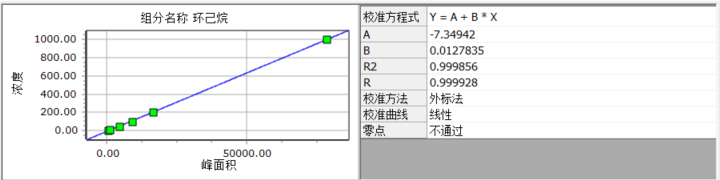
Calibration curve of the first component, cyclohexane
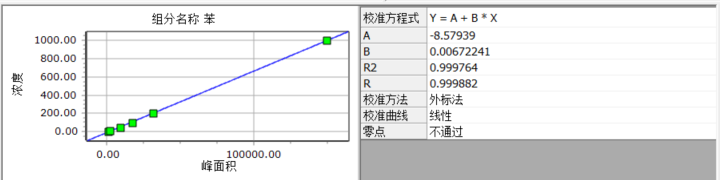
Calibration curve of the second component of benzene
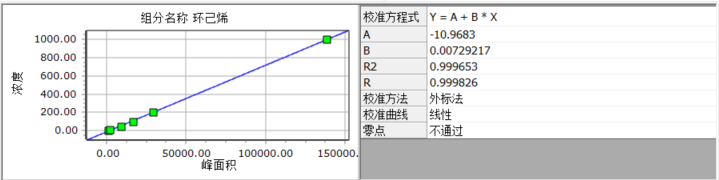
Component 3: Calibration curve of cyclohexene
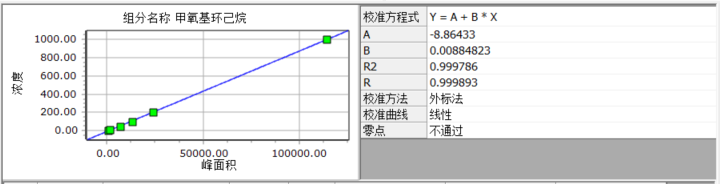
Component 4: Calibration curve of methoxycyclohexane
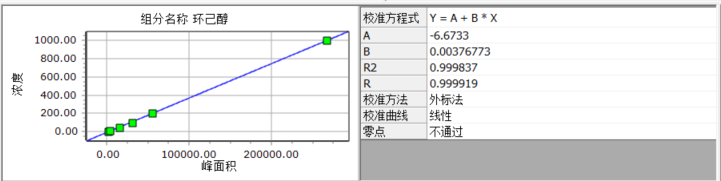
Component 5: Calibration curve of cyclohexanol
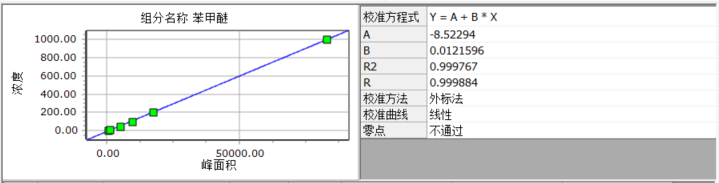
Component 6: Calibration curve of benzyl ether
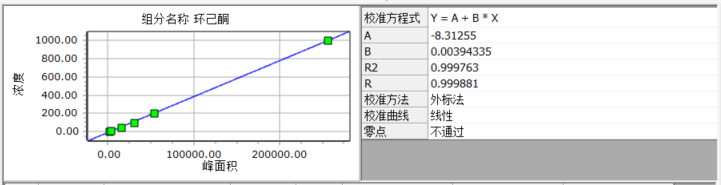
Component 7: Calibration curve of cyclohexanone
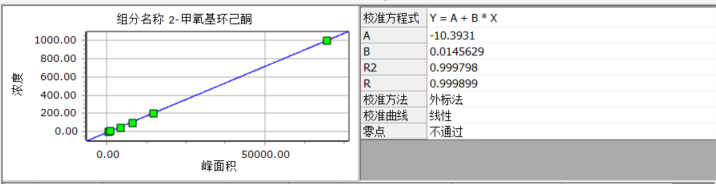
Calibration curve of the eighth component, 2-methoxycyclohexanone
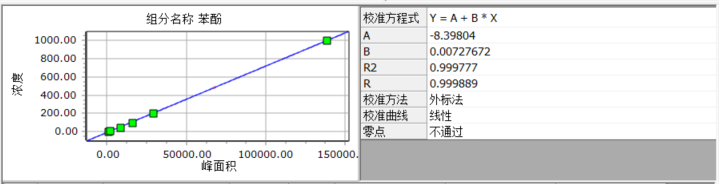
Ninth component: Calibration curve of phenol
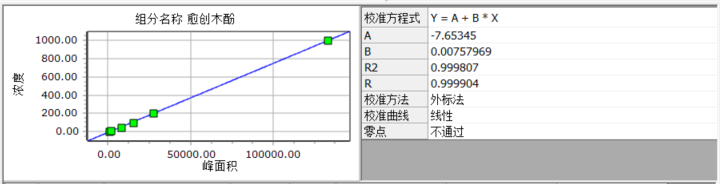
Component 10: Calibration curve of guaiacol
The calibration curve parameters for pentadecane as the internal standard are shown in Figure 12 below.
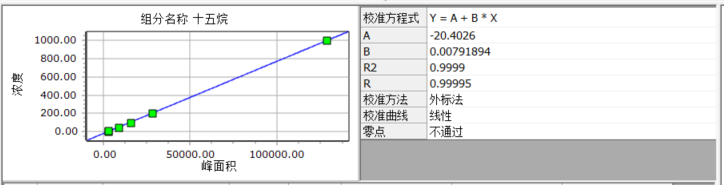
Calibration curve for pentadecane (internal standard).
Chromatograms of effective separation of each component are shown in Figure 13 below.
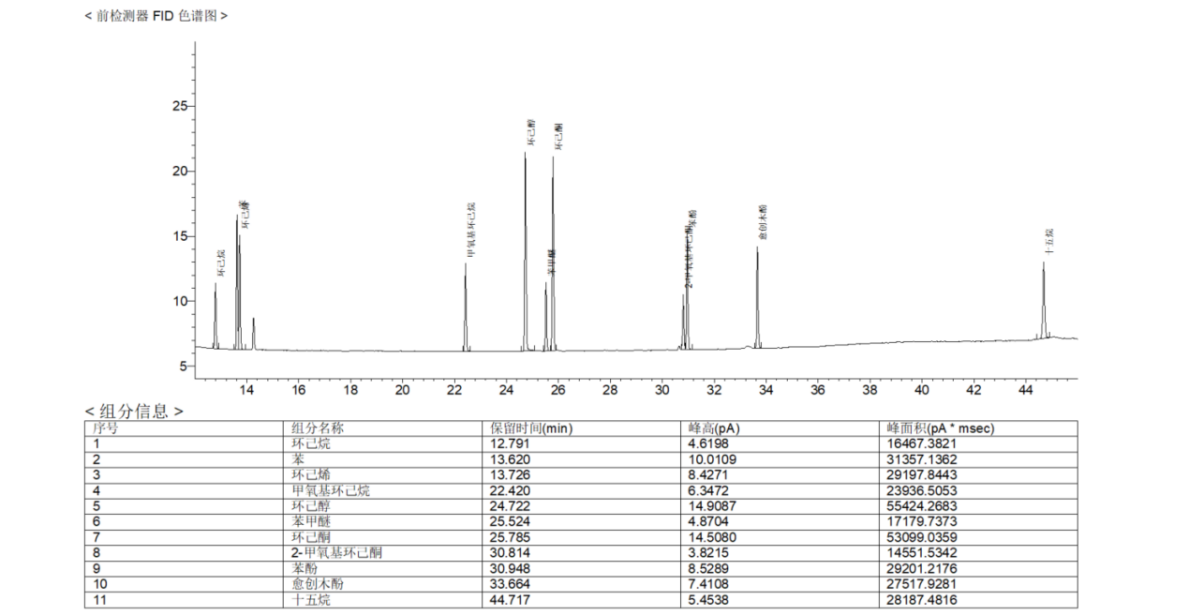
Chromatogram of component separation
5 Summary
This article establishes a GC-FID method based on the BH-624 column (60 m × 0.25 mm × 1.4 μm) for the simultaneous determination of 10 components in the guaiacol hydrodeoxygenation reaction system. The method employs a constant-pressure nitrogen mode (150 kPa), temperature programming, and split injection at 50:1, successfully resolving key difficult-to-separate pairs such as cyclohexane/benzene. The linear correlation coefficients R² of the multi-point standard curves measured in practice are all greater than 0.999, meeting the actual analytical requirements of biomass catalytic conversion research.
This method can be used for:
• Catalyst screening: comparing the product distribution of guaiacol HDO reactions under different catalyst systems.
• Optimization of reaction conditions: investigating the effects of parameters such as temperature, pressure, and space velocity on product selectivity.
• Reaction pathway studies: inferring the reaction network and mechanism through quantitative analysis of changes in the content of each component.
Post time: Nov-05-2026